
Scaling content for a Webflow enterprise agency
We gave a Webflow enterprise agency extra editorial capacity so its team could keep delivery moving across SEO, growth, and client production work.
View case study
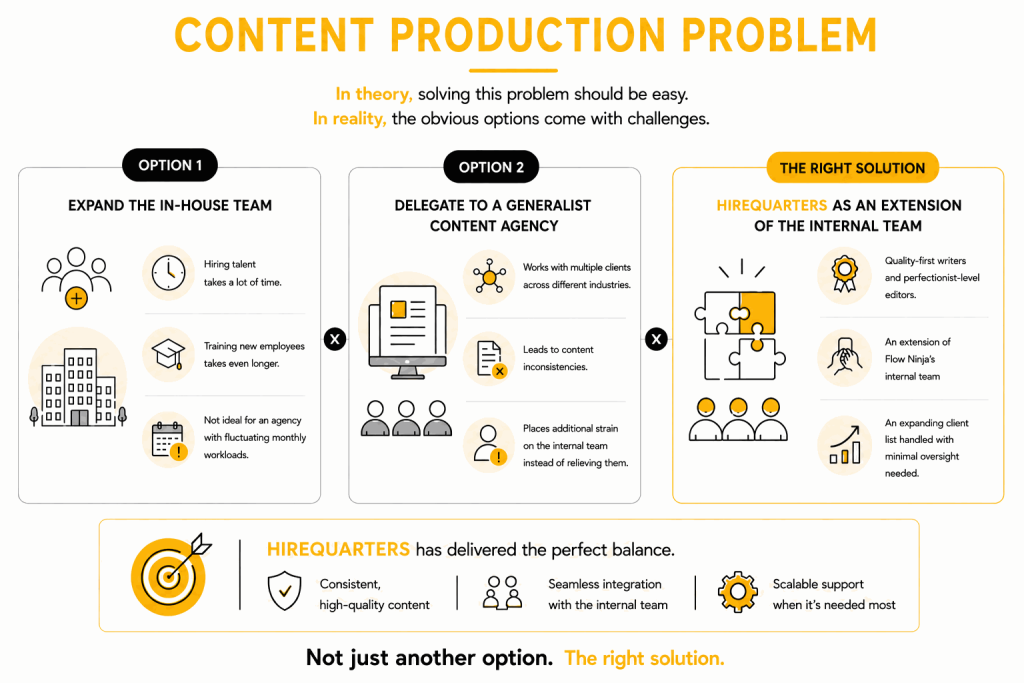

We gave a Webflow enterprise agency extra editorial capacity so its team could keep delivery moving across SEO, growth, and client production work.
View case study

Software buyers check everything. Before a demo they have compared three tools, read the docs and asked an AI assistant which product fits a team like theirs. A page that says “all-in-one” or “enterprise-grade” without proof loses them on the first scroll.
We write for software companies that would sooner show a number than an adjective, so the page still stands when a security lead or a finance director reads it.
Software buyers read more before they talk to you than any other audience we write for. By the time someone books a demo they have compared three tools, skimmed the docs, read the one-star reviews and asked an AI assistant which product fits a team like theirs.
Then the purchase goes to a committee. A security lead sends a questionnaire. Finance asks what the renewal looks like. Someone from legal reads the claims on your site against the contract.
Content that overclaims does not survive that process. “All-in-one”, “enterprise-grade” and “10x faster” cost nothing to write and nothing to ignore. A page that gives the number, the source and the limit is the one that gets forwarded inside the buyer’s company.
| Signal | Generic content | Authoritative content |
|---|---|---|
| Claims | "All-in-one", "10x", "enterprise-grade" | A number, its source and the date |
| Security | A padlock icon and "bank-level" | The audit named, the scope stated, the report on request |
| Pricing | "Contact sales" on every plan | Plans, limits and extras in one table |
| Comparisons | The rival painted as useless | Both tools tested on the same task |
We hold SaaS pages to four tests before they go to you for review.
Every claim has a source. A result comes with the sample, the date and where the reader can check it. If nobody on your team can source a line, it goes.Security is named. The audit, its scope and how to get the report. No padlock icon doing the work of a sentence.Pricing is readable. What each plan includes, where the limits are and what costs extra. Buyers forgive a high price faster than a hidden one.Comparisons are fair. We test both tools on the same task and say where the rival wins. That makes the rest of the page believable, and it keeps you out of trouble with the rival’s lawyers.
A comparison page that admits where the rival wins is the one buyers believe.
We plan SaaS content around what the searcher already knows. Someone typing “how to track sprint velocity” has a problem and no shortlist. Someone typing “best sprint planning software” has a shortlist. “Tool A vs Tool B”, “Tool A alternatives” and “Tool A pricing” come from people days away from a decision. After the sale the searches turn into “how do I” and “does it integrate with”.
Each of those gets its own page with one job. Mixing them is how a site ends up with a feature page that ranks for nothing and a blog that ranks for everything except buying terms.
We write the answer first, then the detail. That is what search engines lift into snippets and what AI assistants quote when a buyer asks them for a recommendation.
An honest page can still sell. It sells with specifics.
In practice we:
Regulators care about some of this. The FTC fines companies for fake reviews and unproven performance claims, and the UK’s DMCC Act sets rules for subscription sign-ups, reminders and cancellation. Buyers care about all of it.
A SaaS page usually has three reviewers, and each one reads for something different. Product checks that the feature works the way the page says. Security checks every word about data, audits and access. Legal checks claims about rivals, results and renewals.
We build the draft for that review. Claims carry their source in a comment. Security wording follows your trust page and your DPA. Anything about a competitor comes with the test we ran and the date. The aim is one review round, not four.
The same product sells differently in each market. A buyer in Germany asks where the data is stored before asking what the tool does. A buyer in the US wants to see the integrations they already pay for. Prices read better in the local currency, and the examples should use companies and rules the reader knows.
We write market pages from that starting point. Data residency, local privacy rules, currency and the integrations that matter in that country go on the page, in the terms people there search with.
Software changes faster than the pages written about it. A screenshot from two releases ago or a plan that no longer exists tells a careful buyer that nobody looks after the site.
Our lifecycle ties the content to your releases:
We cover the pages a software buyer reads between the first search and the renewal. We deliver:
If your product needs a format that is not on this list, tell us. API reference is the one thing we leave to your engineers.
We turn down SaaS work that depends on claims we cannot stand behind. HIREQUARTERS is the wrong partner if you want:
We do our best work with teams that give writers a trial account and thirty minutes with someone from product.
Traffic is the easy number and the least useful one. A SaaS blog can pull thousands of visits from people who will never buy software. We report on the numbers that connect to revenue:
We name clients only when they agree to it. What we can always show is the process, which means the brief, the sourced draft and the review trail. Ask for a sample on the call.
For a public example from the software world, read how we scaled content for a Webflow enterprise agency.
Five steps, the same for a single page or a full library:
Intent decides which page we write. Product truth is the time we spend in your tool and with your team. The draft carries its sources. Review is yours. Refresh follows your release notes.
Working this way gives you:
Tell us what you sell and who buys it, and we will send a plan.
We start with a short call to understand what matters most to your business. Together, we define clear targets and map the best route to reach them quickly and sustainably.
We analyze what your audience searches for and who’s earning their clicks. This helps us spot opportunities, understand intent, and identify where your brand can win visibility.
We group keywords by business value and build a 90-day content roadmap. You get a clear publishing cadence with defined priorities, deadlines, and outcomes you can track.
Writers with domain expertise handle the first drafts, while editors fact-check and polish every piece. The result is conversion-ready content that you can trust.
We optimize titles, headings, FAQ, and CTAs, then connect pages into logical, intent-based paths. This strengthens site structure, improves user engagement, and boosts search visibility.
We secure relevant, audit-safe placements and brand mentions that build long-term credibility. No gimmicks or spammy tactics, just sustainable authority that ranks and lasts.
We track performance through GA4 and GSC, refine what works, and scale proven strategies. Every month, your content becomes sharper, stronger, and more consistent.
We helped a crypto and online trading brand produce careful, compliance-aware content for a sector where accuracy and wording matter.
View case study
We helped a long-established iGaming affiliate keep review content accurate, current, and commercially useful across regulated markets.
View case study
We gave a Webflow enterprise agency extra editorial capacity so its team could keep delivery moving across SEO, growth, and client production work.
View case study

Yes. We ask for a sandbox or a trial account before the first brief. A writer who has clicked through the product writes a different page from one who read the feature list.
Within limits. We write docs overviews, integration guides and comparison pages for technical readers. API reference stays with your engineers.
We test both tools on the same task and say where each one wins. Every claim about a rival carries a source and a date, which also keeps the page out of legal trouble.

Not by a single regulator, but the claims are policed. The FTC acts on fake reviews and unproven performance claims, GDPR covers what you say about data, and consumer law covers subscriptions and renewals. We write with all three in mind.
Tell us your goals; we’ll take care of the roadmap.